clothes
UK baby clothes sizes: newborn to 24 months
UK baby clothes sizes from newborn to 18–24 months: what each size band means, how many sleepsuits to buy for each stage and when to size up.
- Check the brand chart
- Fit before age labels
- Plan for washing
- Updated Oct 2026
By BabyNido editorial team · Published · Last updated
Links marked with * are affiliate links. We may earn a commission at no extra cost to you. How our links work. This is a desk-researched buying guide.
At a glance
| Band you will see | What to do | Skip |
|---|---|---|
| Newborn | Check the brand’s stated height and weight range | Assuming all newborn labels fit alike |
| 0–3 months | Compare with newborn sizing and the baby’s fit | Buying several packs before trying the fit |
| 3–6 months | Check fit and the size the parents need | Treating the third-month birthday as a deadline |
| 6–12, 12–18, 18–24 months | Buy when the current band is tight | A year of clothes in one go |
Key takeaways
- Age bands are a shop convention. They are not GOV.UK law and not an NHS growth chart.
- Count clean changes between washes, allowing for drying time and spares.
- For gifts, ask which size is needed and include a receipt when possible.
- Size up when the garment is tight, not when the hang-tag month arrives.
- Second-hand clothes in the next band are often the right saving.
- GOTS still only counts with a real logo. Size and fibre are different jobs.
What size baby clothes should you buy before birth in the UK?
Start with a small number of practical outfits and compare the brand’s newborn and 0–3 month height and weight ranges. The right fit is not known from the age label alone. Premature and smaller-baby ranges also exist. Keep receipts where possible and wait until you can check fit before buying several packs in one size.
Age labels are a shopping guide, not a substitute for the selected brand’s measurements. The NHS preparation list is a useful general starting point; adjust what you buy for clothes already owned and your washing routine. See babygrow vs sleepsuit for garment names and exact pack-size examples.
Source: NHS: what you will need for your baby (checked 23 Sep 2026).
When should you size up baby clothes?
When poppers strain, feet disappear, or the neck is a fight every change. The month on the label is a hint, not a calendar invite. Some babies skip newborn entirely. Some live in 0–3 past three months. Buy a small pack of the next band before the current one becomes a wrestling match.
Overnight sleepsuits that are too small are miserable at 3 a.m. Too-huge neck holes are a different problem for sleeping bags — see the TOG guide for bag fit, not this page. For everyday clothes, strain and missing feet are the tell. Nappy size is the same idea: the baby in front of you beats the bag.
How many sleepsuits does a UK newborn need?
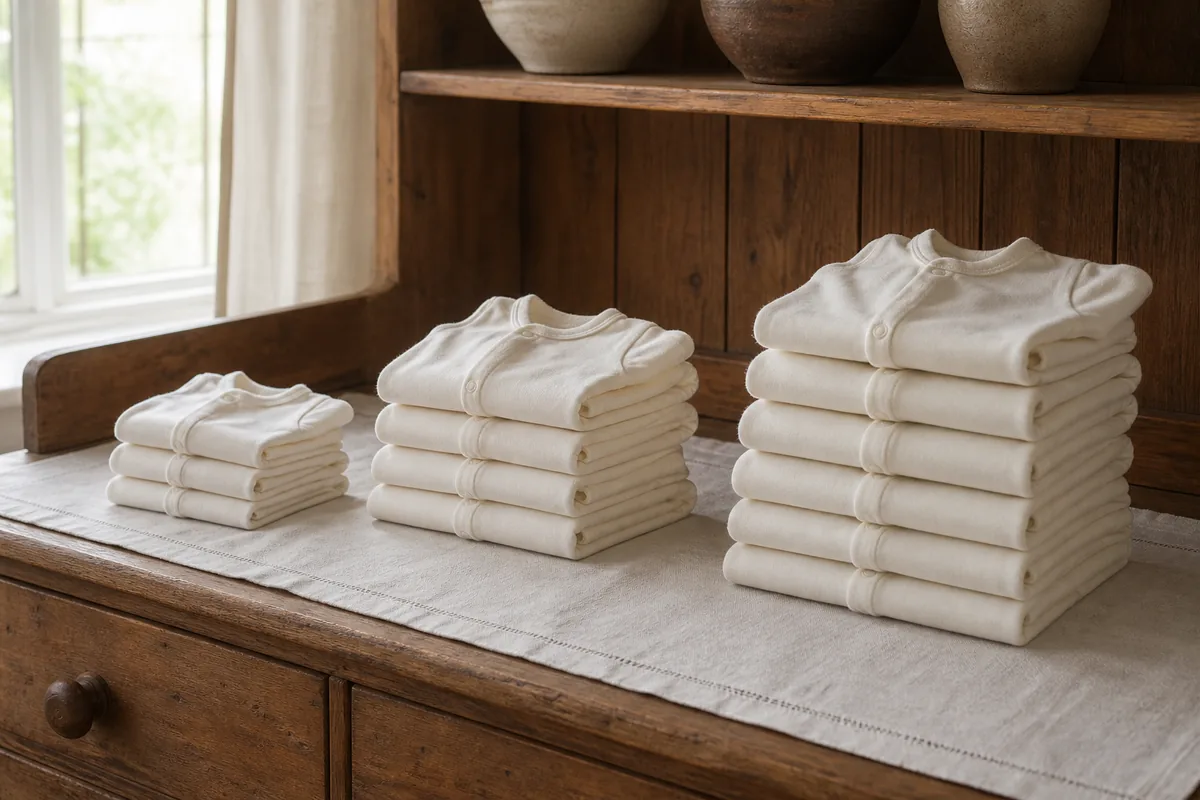
The useful number depends on changes per day, washing frequency, drying time and the clothes you already own. For example, two changes a day over a two-day wash cycle use four sleepsuits before drying and spare needs. That is a planning example, not a universal minimum. Choose the size that fits rather than assuming every newborn needs 0–3 months.
Count useful gifts and second-hand clothing before adding a new pack. Our sleepsuit and bodysuit comparison labels each exact linked size: two 0–3 month sleepsuit packs, 3–6 month long-sleeve bodysuits and 12-month short-sleeve bodysuits.
Ad · affiliate link Compare 0–3 month sleepsuits at John Lewis*
Is UK baby clothing size the same as US onesie size?
No. UK shops mean a footed all-in-one when they say sleepsuit or babygrow. US “onesie” often means the vest. Month bands also do not match across sites. Check whether the garment has legs and feet before you import a pack of six. If the size chart is in pounds only, convert carefully or buy UK.
This is a language page as much as a size page. Import listings also mix seasons. A US 3–6 month summer romper is not a UK winter sleepsuit. Stay on UK retailers if you want UK returns. Organic clothes covers fibre, not inches.
What size should you gift if the baby has already arrived?
Ask the parents which brand and size they need, and whether they want current-fit clothes or a later size. Buying the next age band automatically can miss the season or duplicate existing gifts. If you cannot confirm, a voucher may be more useful. Include a gift receipt when the retailer offers one.
A family welcoming another baby may already have enough clothes; see second baby kit. If you are considering muslins, ask whether another pack would be useful. Our muslin guide compares quantities and cloth sizes without treating them as clothing age bands.
Ad · affiliate link Find 3–6 month cotton sleepsuits on Amazon UK*
Do you need different sizes for day clothes and night clothes?
You need a sleepsuit that fits tonight, not a separate nightwear wardrobe. A too-small all-in-one is a bad overnight. A huge neck hole on a sleeping bag is a different product. Bodysuits layer under sleepsuits in cold rooms. Do not buy two of every print in two size systems.
Nightwear flammability and GOTS are separate rules from month bands. Keep hoods and costumes out of the cot. The Lullaby Trust wants a clear sleep space — clothes that fit are part of not overheating with extra blankets. Pair this page with sleeping bags and TOG if the room is the variable, not the drawer.
Frequently asked questions
What size clothes should I buy for a UK newborn?
Compare the brand’s newborn and 0–3 month height and weight ranges, then check actual fit. Start with a small supply and plan quantities around changes, washing and drying; no one size or pack count suits every newborn.
When should I move from 0–3 to 3–6 months?
When the garment is tight, feet have vanished, or changes are a fight — not on the baby’s three-month birthday.
Are UK and US baby clothes sizes the same?
No. Bands and garment names differ. Check whether the listing is a vest or a footed all-in-one before you buy.
Tools on this topic
- Newborn budget planner UK
Build your baby budget with your own costs. Separate one-off and monthly spending, track what is still needed, and save, print or download your plan.
- UK nappy size helper
Match UK disposable nappy size to weight using typical brand charts. Not a clinical protocol. Works without JavaScript.
Check the evidence
Sources & how to use this guide
Our recommendations use published guidance and product information. We have not physically tested these products. Check the exact model, instructions and retailer listing before buying.
- NHS: what you will need for your baby Source checked: 23 Sep 2026
Read next
-
clothes
Babygrow vs sleepsuit: same garment?
UK babygrow, sleepsuit and bodysuit differences, sizing and laundry planning. Compare selected Gerber multipacks with exact ages, fabrics and pack checks.
-
planning
Newborn essentials checklist UK: what to buy
What a newborn really needs in the UK: a room-by-room checklist of essentials, what can wait, what to skip and the safety checks to make before you buy.
-
clothes
GOTS baby clothes: what the label means
How to read a GOTS label on UK baby clothes: what “organic” and “made with organic” (70% vs 95%) mean, and how to check a brand in the GOTS database.
-
clothes
Organic baby clothes UK: are they worth it?
Are organic baby clothes worth it in the UK? When GOTS-certified cotton makes sense, when ordinary cotton is fine, and which labels mean something.
-
planning
Hospital bag checklist UK: what to pack
What to pack in your hospital bag for labour, baby and the trip home, based on NHS advice. Includes when to pack, what to skip and a free printable checklist.
-
planning
Second-hand baby equipment UK: buying checks
What to check before buying used baby equipment: model details, recalls, missing parts and when buying new makes sense. Practical UK guidance.
-
planning
Second baby kit UK: what to reuse and replace
Having a second baby in the UK? What you can safely reuse, what to replace (car seat, mattress) and what to buy new, including double pushchair decisions.