planning
Second-hand baby equipment UK: buying checks
What to check before buying used baby equipment: model details, recalls, missing parts and when buying new makes sense. Practical UK guidance.
- Known history
- Car seats are strict
- Clothes often fine
- Updated Sep 2026
By BabyNido editorial team · Published · Last updated
Links marked with * are affiliate links. We may earn a commission at no extra cost to you. How our links work. This is a desk-researched buying guide.
At a glance
| Item | Second-hand? | Why |
|---|---|---|
| Cotton sleepsuits, muslins, books | Usually yes | Wash hot, check poppers, skip stained mystery fibres |
| Pushchair chassis | Maybe | Known family, working brakes and fold, no cracked joints |
| Cot or cot-bed frame | Maybe | Stable, no drop-side mechanisms, mattress size you can measure |
| Mattress | Usually no | You need firm, flat, dry, the right size — hard to prove on a stranger’s listing |
| Car seat | Usually no | Unknown crash history, missing labels, expired, or a seat you cannot fit |
Key takeaways
- Clothes and stories are the easy second-hand wins. Safety kit needs a history you believe.
- A car seat that has been in a crash, or whose history you cannot know, is the wrong saving.
- A mattress must be firm, flat and the right size. If you cannot inspect it, buy new.
- Toys need UKCA or CE marking where the law requires it. Skip broken small parts for under-threes.
- Family hand-me-downs beat anonymous marketplace listings for anything with a harness.
- Second baby in the same house is a different case — you already know the history.
What baby items are safe to buy second-hand in the UK?
Plain cotton clothes, muslins, books and many toys with intact marks. A pushchair or cot frame from someone you trust, with working parts, can be. Treat harnesses, mattresses and anything that must meet a current safety standard as a higher bar. If the saving requires you to guess, it is not a saving.
Parents search this because new kit is expensive, not because they want a lecture. The honest split is contact textiles versus crash protection. Wash clothes. Measure cots. Do not romance a bargain infant carrier from a stranger’s boot. When to buy still puts sleep and the car seat first — second-hand only changes where some of that kit comes from.
Can you use a second-hand car seat in the UK?
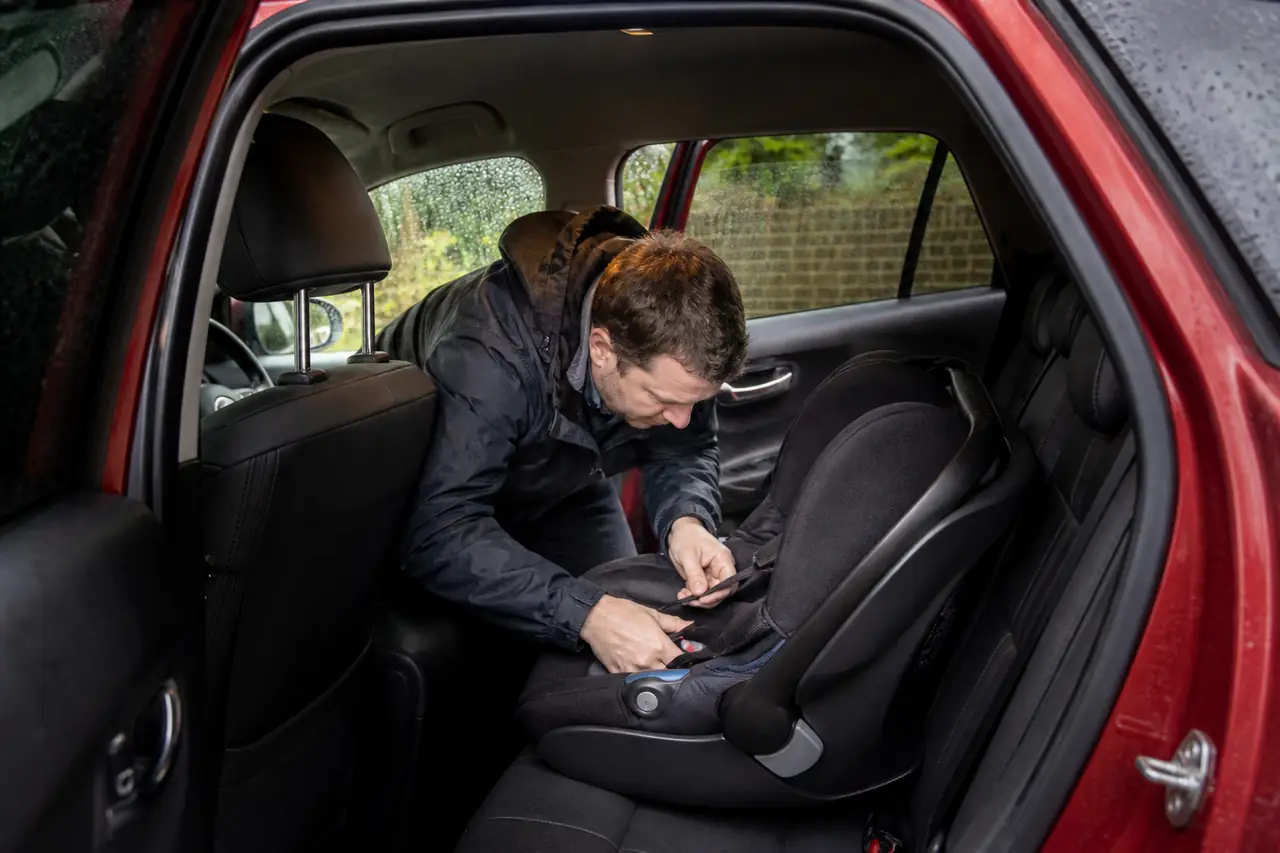
Only if you know its life: no crash, all labels readable, not past the maker’s expiry, and you can fit it correctly. A marketplace seat with a missing history is a skip. Family hand-me-down with the receipt and the manual is a different conversation. GOV.UK still sets the legal category for the child in the car.
GOV.UK child car-seat rules (checked 13 August 2026) tell you which seat the child needs, not how to trust a seller. Makers print expiry dates because plastic and harnesses age. A seat that has been in a collision can look fine and still be the wrong seat. If you cannot answer crash, age, labels and fit, buy new from a seller who will take it back. See car seats. We will not affiliate an unknown-history listing.
Source: GOV.UK — child car seats: the rules (checked 13 Aug 2026).
- All labels present, including R129 or the older R44 mark if it is a seat you already own.
- No cracks, frayed webbing, or a buckle that only sometimes clicks.
- You can install it in your car this week, not “it should fit”.
- Expiry and crash history known. “The seller seemed nice” is not a history.
Is a second-hand cot mattress OK?
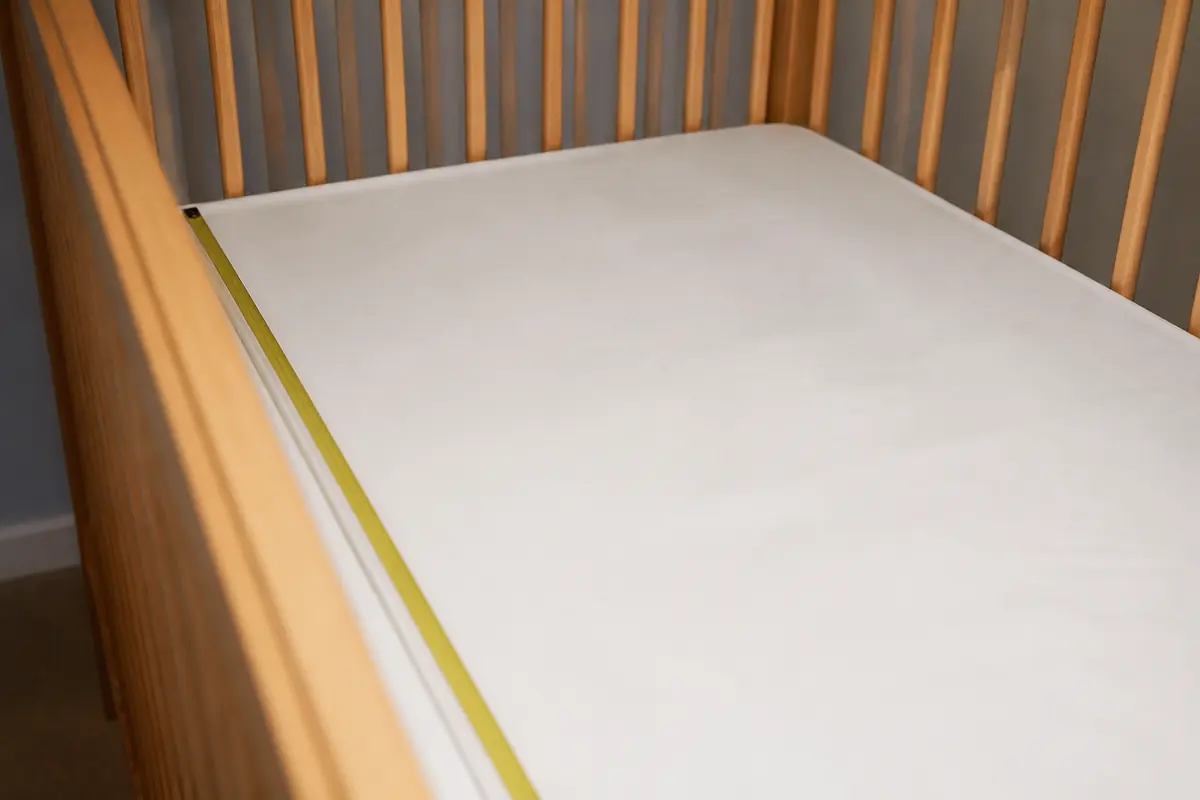
Only if it is firm, flat, dry, the right size, and you can see that it has not sagged or grown mould. A stranger’s mattress is hard to prove. The Lullaby Trust wants a firm flat waterproof mattress in a clear cot. If you cannot inspect it in person, buy new. A second-hand frame is a milder question.
Same house, same baby number two, mattress still firm: that can be reuse, not a marketplace gamble. Anonymous foam with a cute cover is the failure mode. Measure the gap. Read cot mattress. Drop-side cots and padded bumpers stay a skip even when they are free.
Source: The Lullaby Trust — Safer sleep advice (checked 13 Aug 2026).
Are second-hand baby clothes worth it?
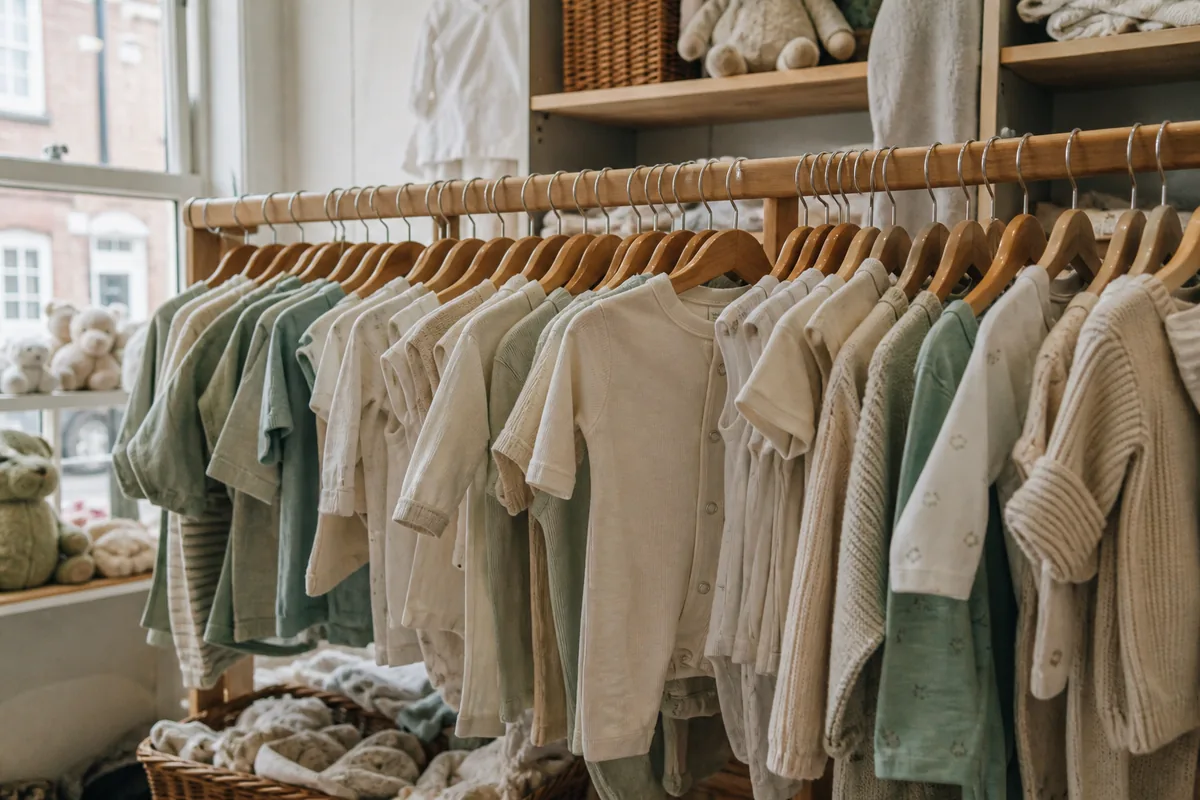
Often yes. 0–3 months lasts weeks. Wash on a hot cotton cycle, check poppers, skip scratchy mystery fibres and anything with loose buttons for overnight sleep. GOTS still only counts when the logo is real — a green leaf on a used romper is not a certificate. Size up gifts toward 3–6 months if the baby has already arrived.
Charity-shop rails and friend piles are how UK families actually clothe newborns. That is fine. Nightwear still needs to be a sleepsuit you would put in a clear cot, not a hooded costume. See clothes sizes and GOTS. Second baby kit is the loft version of this page.
Ad · affiliate link Compare new cotton sleepsuits at John Lewis*
What second-hand baby gear should you skip?
Unknown car seats, unverified mattresses, drop-side cots, broken harnesses, recalled toys, and walkers even when free. A helmet with a crack, a gate that will not latch, a steriliser with a frayed lead: skip. Free is not a safety standard. If a listing is vague on age and accidents, walk away.
Pushchairs from a known family, with brakes that bite and a fold you can do one-handed, can be a genuine save. The infant carrier on top is still a car seat. Helmets, car seats and anything with a crash story belong in the skip pile unless you have paperwork. The skip-finder lists the house no; this page is the second-hand filter.
What should you ask a seller before buying used baby equipment?
Ask for the exact model, age, instructions, all parts and a clear account of its condition. Compare the model and batch details with current recall information before paying. Inspect moving parts and fastenings in person where possible. A clean photograph does not establish that an item is complete, compatible or safe.
- Ask for a photograph of the product label and model code, not only the brand name.
- Confirm that required straps, bolts, brackets, adapters and instructions are included.
- Check whether replacement parts are available from the manufacturer. Avoid improvised repairs.
- Inspect for cracks, loose fastenings, damaged fabric and mechanisms that fail to lock as designed.
- Work out the full cost of collecting, cleaning and replacing permitted parts before comparing it with a new item.
Use a written checklist when collecting so you do not feel rushed into accepting something incomplete. Where a manufacturer gives assembly or inspection steps, follow those steps. Search official recall notices using the exact model, and check the manufacturer’s own notices too. Absence from a recall search does not mean the equipment has passed a fresh safety inspection.
Source: GOV.UK — Product safety alerts, reports and recalls (checked 9 September 2026).
When is buying new baby equipment the more sensible choice?
Buying new is often the simpler choice when the history, condition or completeness of a safety-related item cannot be established. Be especially cautious with car seats and sleep equipment. Set aside money for necessary replacements before valuing a used bundle. A low purchase price is not a saving if the item cannot be used.
RoSPA advises against second-hand child car seats because damage may be hidden and parts or instructions may be missing. Read its full advice before considering a seat from someone you know. For a cot, crib or Moses basket, check the complete assembly and the mattress separately rather than accepting a bundle as one safe unit.
For lower-risk items such as ordinary baby clothes, inspect fastenings, loose threads and care labels, then wash them as instructed. Avoid buying an entire season of one size simply because the bundle is inexpensive. Ask what you can actually use in the next few weeks. Our UK baby clothes sizes guide explains why age labels are only a starting point.
Source: RoSPA — Second-hand child seats (checked 9 September 2026).
Frequently asked questions
Is a second-hand car seat ever OK in the UK?
Only with a known history: no crash, labels intact, not expired, and a fit you can do. Anonymous marketplace seats are a skip.
Can I use a second-hand cot mattress?
Only if you can inspect firmness, size, dryness and sag. If you cannot, buy new. The sleep space is not the place to guess.
Are charity-shop baby clothes safe?
Usually, after a hot wash and a popper check. Skip loose buttons for overnight and anything you cannot identify as cotton next to skin.
Tools on this topic
- Newborn budget planner UK
Build your baby budget with your own costs. Separate one-off and monthly spending, track what is still needed, and save, print or download your plan.
- UK car seat finder
Find which UK car-seat type to shop for: R129 rear-facing, height vs weight, and when forward-facing is legal. Not a product rank.
- UK baby skip-list finder
See what UK baby kit to skip by stage: hospital, newborn, sleep, gear and crawling. Works without JavaScript.
Check the evidence
Sources & how to use this guide
Our recommendations use published guidance and product information. We have not physically tested these products. Check the exact model, instructions and retailer listing before buying.
- GOV.UK — child car seats: the rules Source checked: 13 Aug 2026
- The Lullaby Trust — Safer sleep advice Source checked: 13 Aug 2026
- GOV.UK — Product safety alerts, reports and recalls Source checked: 9 September 2026
- RoSPA — Second-hand child seats Source checked: 9 September 2026
Read next
-
planning
When to buy baby stuff UK: a trimester timeline
When to start buying baby things in the UK: a trimester timeline with sleep and the car seat first, what can wait until after the birth and what to skip.
-
gear
Baby car seats UK: i-Size buying guide
Compare baby car seats, R129 and i-Size rules, ISOFIX or belt fitting, complete costs and used-seat risks. UK sources and a practical fitting checklist.
-
sleep
Cot mattress buying guide UK: fit & safety
Choose a cot mattress by fit, firmness, waterproof protection and care instructions. UK safer-sleep sources and a practical bedroom setup checklist.
-
planning
Second baby kit UK: what to reuse and replace
Having a second baby in the UK? What you can safely reuse, what to replace (car seat, mattress) and what to buy new, including double pushchair decisions.
-
planning
Newborn essentials checklist UK: what to buy
What a newborn really needs in the UK: a room-by-room checklist of essentials, what can wait, what to skip and the safety checks to make before you buy.
-
clothes
GOTS baby clothes: what the label means
How to read a GOTS label on UK baby clothes: what “organic” and “made with organic” (70% vs 95%) mean, and how to check a brand in the GOTS database.
-
gear
Pushchairs & travel systems UK: buying guide
Compare prams, pushchairs and travel systems for stairs, buses, small homes and car boots. Practical checks to help UK parents choose the right setup.
-
gear
How to check UK baby product recalls
How to check if a baby product has been recalled in the UK: search the GOV.UK product safety database by brand, model and batch, and what to do if it matches.
-
clothes
UK baby clothes sizes: newborn to 24 months
UK baby clothes sizes from newborn to 18–24 months: what each size band means, how many sleepsuits to buy for each stage and when to size up.