gear
Baby car seats UK: i-Size buying guide
Compare baby car seats, R129 and i-Size rules, ISOFIX or belt fitting, complete costs and used-seat risks. UK sources and a practical fitting checklist.
- UK law
- R129 / i-Size
- GOV.UK sourced
- Updated Sep 2026
By BabyNido editorial team · Published · Last updated
Links marked with * are affiliate links. We may earn a commission at no extra cost to you. How our links work. This is a desk-researched buying guide.
At a glance
| Fact | Detail |
|---|---|
| What it is | A legal child restraint for UK cars — not a cot and not a pram accessory |
| Until when | 12 years old or 135 cm tall, whichever comes first, then a seat belt |
| Rear-facing | Height-based R129 (i-Size) seats must stay rear-facing until over 15 months |
| Buy new | Prefer R129 / i-Size. An R44 seat you already own can remain legal if it still fits |
| Skip | Unknown-history second-hand seats; rear-facing in front of an active frontal airbag |
| Source | GOV.UK — Child car seats: the law, checked 13 Aug 2026 |
Key takeaways
- If you use a car, an approved child seat is not optional. The law is the floor, not a brand campaign.
- Prefer height-based R129 (i-Size) when buying new. Keep rear-facing until over 15 months — longer if the seat allows.
- Children normally need a seat until 12 years or 135 cm. After that, a seat belt.
- Never fit a rear-facing seat in front of an active frontal airbag.
- A travel-system carrier is travel, not overnight sleep. Move the baby to a flat sleep space at home.
- ISOFIX is a fitting method, not a higher legal class. A correctly seatbelt-fitted R129 seat is legal.
- Unknown-history boot-sale seats are a skip. Plastics age and you cannot see a previous crash.
- Fit the hospital-run seat before labour. Do not learn the harness in a hospital car park.
What does UK car seat law actually require?
Children must normally use a child car seat until they are 12 years old or 135 cm tall, whichever comes first. After that, a seat belt. Height-based R129 (i-Size) seats must be rear-facing until over 15 months. Never fit a rear-facing seat in front of an active frontal airbag. That is the law, not a brand campaign.
GOV.UK, “Child car seats: the law”, checked 13 August 2026. Height-based seats show a capital E in a circle and “R129”. Older weight-based seats show “ECE R44”. New seats sold in the UK are on the R129 path; an R44 seat you already own can still be legal if it fits and is in good condition. We are not your installer. If the seat wobbles or the label is gone, do not guess.
Source: GOV.UK — Child car seats: the law (checked 13 Aug 2026).
| Group | Weight | Typical shape |
|---|---|---|
| 0 | 0–10 kg | Lie-flat or rear-facing carrier |
| 0+ | 0–13 kg | Rear-facing carrier or seat |
| 1 | 9–18 kg | Rear- or forward-facing with harness or shield |
| 2 | 15–25 kg | High-backed booster or similar |
| 3 | 22–36 kg | High-backed booster or booster cushion (new cushions: group 3 only) |
Should you buy i-Size or an old R44 seat?
Buy R129 / i-Size if you are buying new. It is height-based, rear-facing until over 15 months, and it is what new seats are. An R44 seat already in the family can remain legal with the right label and fit. Do not buy a new R44 as a bargain — you want a seat you can replace with current advice.
Extended rear-facing (behind 15 months, often to around 105 cm on some seats) is best-practice talk from safety advocates, not a GOV.UK requirement. The law is the floor. Turning forward at 15 months because you are bored of the mirror is legal on R129 and still a worse idea than staying rear-facing while they fit. See rear-facing vs forward-facing.
Ad · affiliate link Compare i-Size car seats at John Lewis*
Is a second-hand car seat safe to buy?
Only from someone you trust, with a known crash-free history, all parts, a readable label, and within the maker’s life span. A boot-sale seat with no story is a skip. Plastics age; harnesses fray; you cannot see a previous crash. This is the one baby item where “pre-loved” is often the wrong saving.
If money is the block, ask the maternity unit, a local lending scheme, or a retailer finance option before a Facebook unknown. We do not have a sourced price for “average UK infant carrier” and will not invent one.
Can a newborn go home in a travel-system seat?
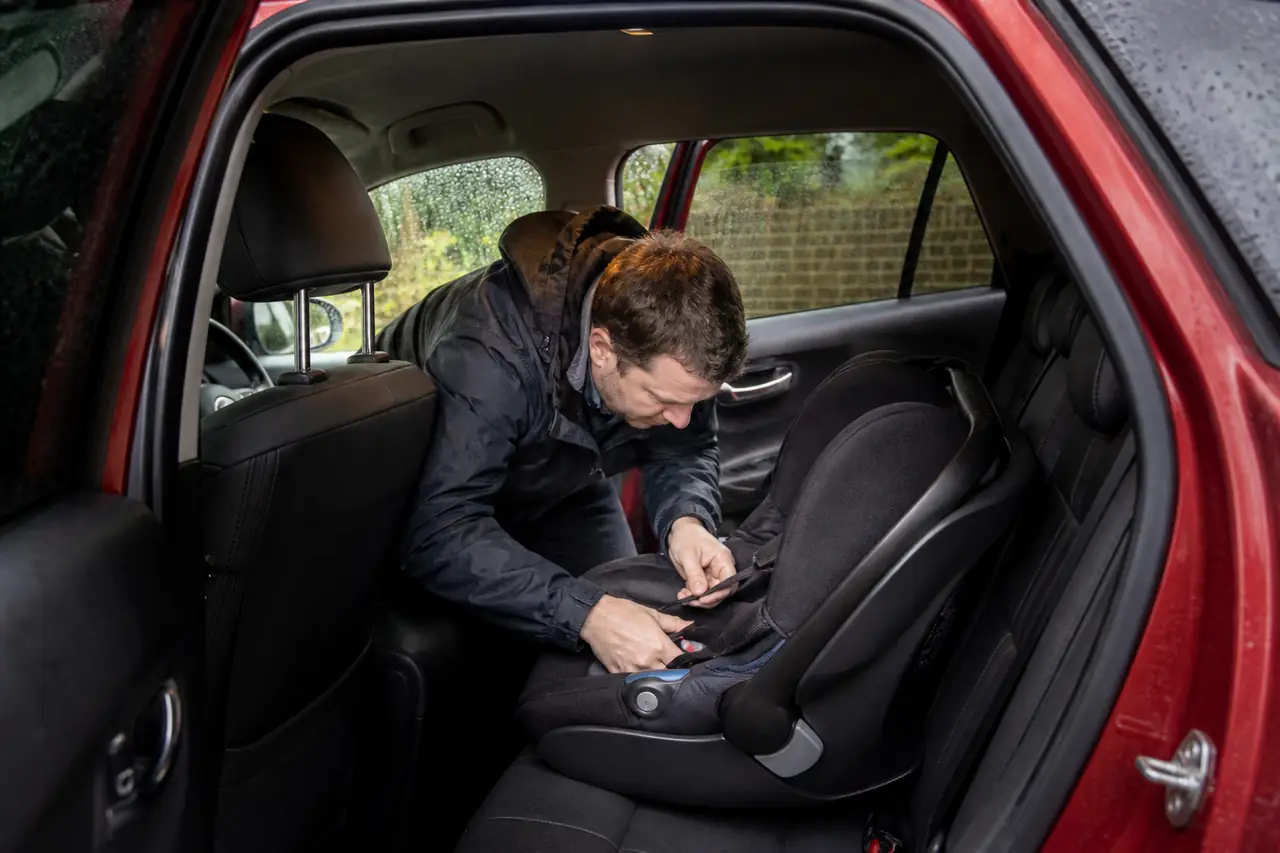
Yes if the infant carrier is approved, fits the baby, and is correctly fitted — ISOFIX or seatbelt, following the manual. A travel system is a convenience: the seat clicks on a chassis. It is not a cot. Do not leave a sleeping newborn in a car seat once you are home; move them to a flat sleep space.
The Lullaby Trust and in-car safety advice both treat car seats as travel, not overnight sleep. Hospital car parks are why you fit the seat before labour, not after. See hospital bag and pushchairs.
Ad · affiliate link Browse car seats at Argos*
Should you buy ISOFIX or a seatbelt-fitted car seat?
ISOFIX is a fitting method, not a higher legal class. A correctly seatbelt-fitted R129 seat is legal. Buy the route that matches your car and that you can lock in. If the base does not click, it is not fitted. Try it in the car with the manual. Matching fabric will not invent ISOFIX in a car that has none.
GOV.UK’s child car-seat rules cover both ISOFIX and seatbelt installations (checked 13 Aug 2026). Grandparents’ cars are a second fitting problem: assume nothing about compatibility. If there is no ISOFIX, a belt-fitted infant carrier that you have practised is the honest answer. See ISOFIX vs seatbelt and the car-seat finder.
Do you need a car seat in a UK taxi?
GOV.UK says children can travel without a child car seat in a taxi if one is not available; they should use an adult belt if it fits. That is not a reason to skip a seat in your own car. For the hospital run, fit your own seat before labour. Do not treat a taxi exemption as everyday policy.
Source: GOV.UK — Child car seats: the law (checked 13 Aug 2026).
Should you replace a car seat after a crash?
Follow the manufacturer: many say replace after a moderate or severe impact even if the plastic looks fine. We will not invent a g-force number. If you cannot prove the history, treat it like a boot-sale skip. Insurance sometimes helps. A hairline crack is enough to stop using it. Second-hand with a story still needs that story.
This is why unknown-history seats fail the skip-list. A frame you can inspect is not the same as a seat that absorbed a crash you did not see. If money is the block, ask a lending scheme before a Facebook unknown.
Which infant car seats are worth comparing in the UK?
Compare R129 infant carriers that fit your car, not a fabric pack. Joie, Maxi-Cosi and Cybex listings show up often. We have not installed them. Sit in the actual car with the manual. Skip unknown-history second-hand seats. Awin high-street hops can sit beside Amazon when those URLs are live.
This is not a crash-test rank. GOV.UK is the law. The car-seat finder names the category. Then compare listings that show a readable R129 label and a base or seatbelt route that matches your car.
Ad · affiliate link Compare i-Size car seats at John Lewis*
Example UK options to compare, not a ranked best-of. We have not lab-tested them. Model checks are dated where available. Affiliate links (*). Check the exact listing, seller and included parts before buying.
-
Car seats · Amazon UK
Joie i-Snug / i-Size infant carrier
A common UK R129 infant carrier listing. Compare the height range, whether it needs a base, and whether it fits your car — not the fabric pack.
Skip if: You have not sat in the actual car with the manual, or you were buying it only as a pram accessory.
Ad · affiliate link Compare Joie i-Size infant carriers on Amazon UK*
-
Car seats · Amazon UK
Maxi-Cosi Pebble / Coral infant carrier
Frequently listed as a click-in infant carrier for travel systems. Check R129 labelling and ISOFIX base compatibility for your chassis.
Skip if: The listing is an old R44 leftover, or the base is sold separately and you have not budgeted for it.
Ad · affiliate link Compare Maxi-Cosi infant carriers on Amazon UK*
-
Car seats · Amazon UK
Cybex Cloud i-Size infant carrier
Often compared for a lie-flat-on-chassis story. The car is still travel, not a cot. Confirm the legal category and the fit in your seats.
Skip if: You wanted a cheap second-hand seat, or you will not keep it rear-facing past 15 months.
Ad · affiliate link Compare Cybex Cloud car seats on Amazon UK*
How should you plan the hospital-run car seat?
Fit the seat in your own car before labour, using the manual. Practise taking the baby in and out. A hospital car park at midnight is the wrong classroom. The seat is travel, not a cot: once home, move them to a flat sleep space. Skip buying it the week you are due.
Worked example: you drive a five-door hatchback and will collect from a postnatal ward. The job is an R129 infant carrier that locks into that car, rear-facing, not in front of an active airbag. A matching chassis is optional. If a partner or grandparent will collect, they need a fitted seat in their car too — not your colourway. See hospital bag.
| Before you go in | Skip |
|---|---|
| Seat labelled R129 / i-Size, readable | Unknown-history second-hand |
| Installed in the car you will actually use | First install in the hospital car park |
| Rear-facing, airbag off if it must go in front | Front seat with an active frontal airbag |
| You have practised the harness | A travel system bought only for the fabric |
What if grandparents have no ISOFIX?
A seatbelt-fitted R129 infant carrier is legal if the manual allows that route and you can lock it in. ISOFIX is convenience, not a higher legal class. Sit in their car with the manual. Assume nothing about bases. A matching travel-system chassis will not invent ISOFIX. If it will not tighten, that car does not take that seat.
Worked example: Granny’s 2009 supermini has belts and no ISOFIX points. The honest gift is a belt-install infant carrier you have practised together, or they use a taxi under GOV.UK’s taxi rules and you do the regular runs. A second full travel system for her hallway is how you pay twice. See pushchairs.
When is a booster cushion legal in the UK?
GOV.UK still lists booster cushions in older R44 groups, and says new cushions can only be made as group 3. A high-backed booster is the usual next step after a harnessed seat. A backless cushion is not a newborn product. Check the label. Skip a cushion because it was cheap.
THINK! notes a high-backed booster gives more support than a cushion, and that it is safest to use a booster until about 150 cm — that is best-practice talk, not a replacement for the 12 years or 135 cm legal floor (THINK! seat-belt booklet; GOV.UK child car seats, both checked 13 Aug 2026). We will not rank cushion brands. We will tell you not to jump to a cushion to make the child look “grown up”.
Source: GOV.UK — Child car seats: the law (checked 13 Aug 2026).
Can a child travel without a car seat on a coach or in a taxi?
Yes in GOV.UK exceptions: taxis if the driver has no correct seat (rear seat; belt if 3 or older); coaches if seats are not provided. That is not everyday policy for your own car. Provide your own seat if you want one on a coach. Read the GOV.UK page for unexpected journeys.
Source: GOV.UK — When a child can travel without a car seat (checked 13 Aug 2026).
The hospital run in your own car is not a taxi exception. Fit the seat. A minicab home from A&E might be. Do not treat an exemption as a shopping skip. The skip-list is for unknown-history seats, not for GOV.UK’s taxi paragraph.
How do you know a car seat is actually fitted?
The manual’s click, lock or belt path is the test, not a strap you guessed. If the base wobbles more than the maker allows, it is not fitted. If the label is gone, stop. We will not invent a millimetre of play. Sit in the car. A retailer fitter beats a YouTube video.
- Read the seat manual for that model, not a generic “ISOFIX tips” reel.
- Check the car handbook for ISOFIX points and airbag warnings.
- Harness at the shoulders as the maker shows — not “a bit loose so they are comfy”.
- Never put a rear-facing seat in front of an active frontal airbag (GOV.UK, checked 13 Aug 2026).
Who should skip a 0 to 4 years travel-system seat?
Anyone who wanted a lie-flat pram more than a car seat, who will not keep it rear-facing past 15 months, or who is buying it only because the chassis matched. A seat that fits the cars you use beats a combo you never install. Skip it if you barely drive.
Award-style “best travel system” tables go stale when a chassis is discontinued. Our job is the skip: a second seat you will not fit, a front-facing jump at 15 months because the mirror is boring, and a boot-sale history. The car-seat finder names the legal category. Then compare listings. Do not add SKUs to dodge the fitting.
How do you compare the complete cost of an infant car seat?
Compare the seat, any required base and the fittings you need for your actual car. A lower seat-only price can become more expensive when a base is added. Check whether approved belt installation is available for that exact model. Pushchair compatibility is a separate question from safe installation in a vehicle.
| Cost or fit check | Ask this question | Why it matters |
|---|---|---|
| Seat and base | Is the base included, optional or required? | A bundle name does not reliably identify every component |
| More than one car | Is each vehicle and seating position approved? | A base that fits one vehicle may not suit another |
| Everyday handling | Can every regular carer use the harness and release correctly? | A convenient fitting method must also be usable in practice |
| Next stage | What height and weight limits apply to this exact seat? | An age description is not enough to establish fit |
Save a copy of the model name and manufacturer fitting information alongside your shortlist. Take the vehicle details, seating position and any floor-storage information to a specialist retailer or fitting service. Ask to see the proposed setup in your own car. Check that the instructions for the seat and the car agree; an online compatibility statement does not replace that check.
The ISOFIX versus seat belt comparison helps explain the installation choices. Neither method earns an automatic recommendation for every family. If different carers regularly move the seat, ease of repeating the correct installation may be especially important. A rotating base or a matching fabric does not, by itself, establish better crash protection.
Source: GOV.UK — Child car seats: the law (checked 9 September 2026).
What information should you take to a car-seat fitting appointment?
Take the child’s current height and weight, the exact vehicle details and information about every car that will use the seat. Explain who will install it, whether seats move between cars and how you travel. Ask the fitter to demonstrate the installation, then practise it yourself using the manufacturer’s instructions.
Make a written comparison while you are there: approval label and limits; permitted seating positions; base or belt requirements; how the harness adjusts; whether the front seat position affects the installation; and which inserts are used at each stage. Ask the retailer to show you where these details appear in the manual. This turns a demonstration into instructions you can revisit at home.
Do not buy a used car seat with an unknown history to reduce the budget. RoSPA warns that damage may not be visible and that a seat may have missing instructions or parts. If considering a seat from family or friends, consult that guidance and the manufacturer with the full history before deciding. A new lower-cost seat that fits correctly is a different proposition from an unknown used premium model.
Source: RoSPA — Second-hand child seats (checked 9 September 2026).
Frequently asked questions
When can a baby face forward in a car seat in the UK?
On a height-based R129 seat, only when they are over 15 months and within the seat’s height and weight range. The legal minimum is not a target; rear-facing for longer is better if the seat allows.
Until what age does a child need a car seat in the UK?
Until they are 12 years old or 135 cm tall, whichever comes first. Then a seat belt. Always check the specific seat’s limits.
Can I put a rear-facing seat in the front?
Only if the frontal airbag is deactivated. GOV.UK is explicit. The rear seats are the default safer place.
Do I need a car seat in a taxi in the UK?
GOV.UK allows travel without a child car seat in a taxi or minicab if one is not available. Use an adult belt if it fits. Still fit a seat in your own car, including the hospital run.
When should I fit the car seat for the hospital?
Before labour, in the car you will actually use. Practise the harness. Do not learn ISOFIX in the hospital car park. The seat is travel, not overnight sleep.
Tools on this topic
- UK car seat finder
Find which UK car-seat type to shop for: R129 rear-facing, height vs weight, and when forward-facing is legal. Not a product rank.
Check the evidence
Sources & how to use this guide
Our recommendations use published guidance and product information. We have not physically tested these products. Check the exact model, instructions and retailer listing before buying.
- GOV.UK — Child car seats: the law Source checked: 9 September 2026
- GOV.UK — When a child can travel without a car seat Source checked: 13 Aug 2026
- RoSPA — Second-hand child seats Source checked: 9 September 2026
Read next
-

planning
Newborn essentials checklist UK: what to buy
What a newborn really needs in the UK: a room-by-room checklist of essentials, what can wait, what to skip and the safety checks to make before you buy.
-

planning
Hospital bag checklist UK: what to pack
What to pack in your hospital bag for labour, baby and the trip home, based on NHS advice. Includes when to pack, what to skip and a free printable checklist.
-

gear
Pushchairs & travel systems UK: buying guide
Compare prams, pushchairs and travel systems for stairs, buses, small homes and car boots. Practical checks to help UK parents choose the right setup.
-
sleep
Travel cots UK: when you need one
Do you need a travel cot? When nights away justify one, mattress safety rules that still apply, and UK travel cot listings worth comparing.
-
gear
Flying with a baby UK: rules, car seats and buggies
Flying with a baby from the UK: infant lap belts, airline-approved car seats, taking a buggy to the gate, milk through security and what the CAA says.
-

gear
How to check UK baby product recalls
How to check if a baby product has been recalled in the UK: search the GOV.UK product safety database by brand, model and batch, and what to do if it matches.
-
gear
Double pushchairs UK: when you need one
Do you need a double pushchair? Tandem vs side-by-side for UK doors and buses, and when a buggy board or a sling for the older child is enough.
-

gear
Baby carriers and slings UK: how to choose
How to choose a baby carrier or sling in the UK: stretchy wrap vs buckle carrier, T.I.C.K.S. safety checks and when a carrier can replace a pushchair.
-
gear
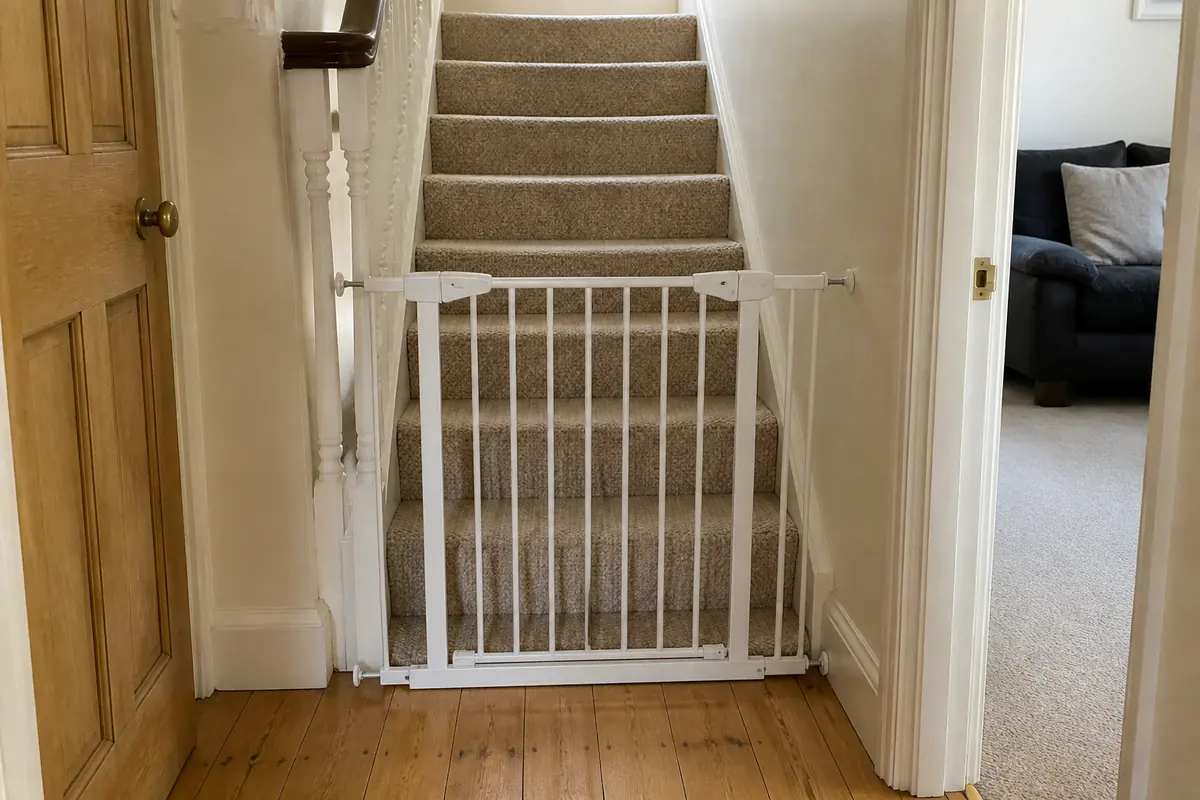
Baby proofing UK: stair gates, locks and timing
When to start baby proofing in the UK: pressure-fit vs screw-fit stair gates, cupboard locks, what to buy first and why it is not a newborn essential.