clothes
Organic baby clothes UK: are they worth it?
Are organic baby clothes worth it in the UK? When GOTS-certified cotton makes sense, when ordinary cotton is fine, and which labels mean something.
- UK clothes
- Label-led
- Not a wardrobe
By BabyNido editorial team · Published · Last updated
Links marked with * are affiliate links. We may earn a commission at no extra cost to you. How our links work. This is a desk-researched buying guide.
Are organic baby clothes worth it in the UK?
They may be worth the extra for a verifiable textile-production standard, but an organic label does not establish a health benefit for your baby. Compare fit, fabric composition, seams, washability and cost. Buy the pieces you need; you do not need to replace comfortable clothes solely because they lack GOTS certification.
BabyNido previously sold GOTS sleepsuits. That commercial history is disclosed because it can influence a recommendation. This guide now compares the certification claim with the practical buying decision. We have not tested fabrics, measured residues or established that certified organic clothing improves a baby’s skin.
Ad · affiliate link Browse organic baby clothes at John Lewis*
What does GOTS actually certify?
GOTS is a textile standard, not a baby-safety mark. “GOTS organic” means at least 95% certified organic fibre; “made with organic” is 70–94%. It also restricts processing chemicals and includes social criteria at certified facilities. A garment can be cotton and still not be GOTS. Look for the logo and the grade, not the word organic alone.
The Global Organic Textile Standard is published by the GOTS organisation. Percentages above are from the standard’s labelling grades (checked 13 August 2026). OEKO-TEX Standard 100 is a different claim: it tests for harmful substances in the finished article, and it can apply to conventional cotton. GOTS and OEKO-TEX can appear together; they are not substitutes. UKCA/CE marking on toys in a gift set is a third system again — see GOTS baby clothes.
Source: Global Organic Textile Standard — The Standard (checked 13 Aug 2026).
Is bamboo better than organic cotton for babies?
Not automatically. Most “bamboo baby clothes” are viscose or lyocell made from bamboo pulp — a chemically processed fibre — not a bamboo leaf against the skin. It is not a GOTS substitute unless the garment is actually GOTS-certified. If you want a traceable organic farm story, cotton with a GOTS logo is the clearer claim.
For eczema, fabric comfort and individual triggers matter. Eczema UK commonly recommends cotton and also discusses other soft fabrics; it does not make GOTS certification a treatment requirement. The NHS advises avoiding things that worsen symptoms and seeing a GP if your child has symptoms of eczema. Follow their care advice rather than buying a certification as treatment.
Source: Eczema UK — clothing and eczema (checked 7 Oct 2026).
Source: NHS — atopic eczema (checked 7 Oct 2026).
How should you wash organic baby clothes?
Follow the care label for wash temperature and drying. There is no single washing routine suitable for every garment or child. If your baby has eczema, the NHS notes that detergents and some fabrics can aggravate it. Discuss persistent irritation with a health professional instead of assuming organic fibres will solve it.
Keep the garment’s care instructions, and pay attention to what your child tolerates. Changing the washing method is a separate decision from paying for organic certification. Product-care instructions and individual clinical advice take priority over a general shopping guide.
Source: NHS — atopic eczema: triggers and when to get help (checked 7 Oct 2026).
When are organic baby clothes not worth the extra?
Skip the premium when it strains your budget, the garment will rarely be used, or you cannot verify the certification. Comfortable clothes you already own do not need replacing. Compare the same garment type, fit and care requirements; pay extra only if the production standard matters to you.
Gift-givers should read what to put in a new baby hamper: check the requested size and choose something the family will use. Parents buying for themselves should start with newborn essentials, not a full organic wardrobe.
Ad · affiliate link Compare GOTS sleepsuits on Amazon UK*
Should you replace every babygrow with an organic one?
No. Keep clothes that fit, feel comfortable and wash well. If you choose certified organic for future purchases, check the licence and the garment’s actual fibre composition. Replacing an entire usable wardrobe is unnecessary. A smaller set of suitable clothes can serve your family better than buying every available certification label.
For how to look up a licence, use GOTS baby clothes. For clothing types and a practical starting wardrobe, use babygrow vs sleepsuit. If a skin condition is the concern, use the NHS advice linked above; this guide does not establish a clinical benefit from an organic label.
Ad · affiliate link Compare GOTS baby clothes at John Lewis*
Frequently asked questions
Is organic baby clothing worth it?
It can be worth paying for a verifiable fibre and processing standard if that matters to you. It is not a necessary health purchase. Compare comfort, fit, care requirements and your budget before paying a premium.
Are organic baby clothes better for eczema?
The sources cited here do not establish that organic certification improves eczema. Comfortable fabric and individual triggers matter. Use NHS and Eczema UK guidance, and speak to a GP if your child has eczema symptoms.
Organic cotton vs bamboo baby clothes — which is better?
GOTS organic cotton is the clearer farm-to-garment claim. Bamboo-derived viscose can feel soft but is usually chemically processed and is not “organic cotton”. Compare the actual certification on the label.
Tools on this topic
- Newborn budget planner UK
Build your baby budget with your own costs. Separate one-off and monthly spending, track what is still needed, and save, print or download your plan.
Check the evidence
Sources & how to use this guide
Our recommendations use published guidance and product information. We have not physically tested these products. Check the exact model, instructions and retailer listing before buying.
- Global Organic Textile Standard — The Standard Source checked: 13 Aug 2026
- Eczema UK — clothing and eczema Source checked: 7 Oct 2026
- NHS — atopic eczema: triggers and when to get help Source checked: 7 Oct 2026
Read next
-
clothes
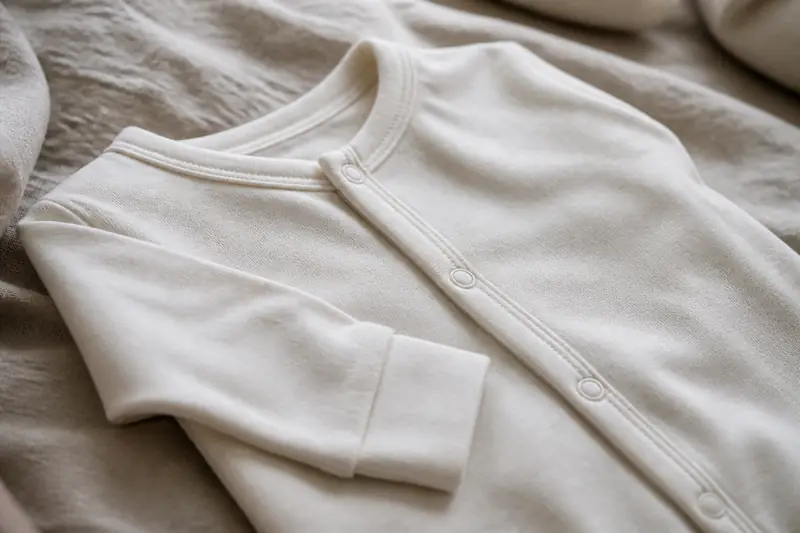
GOTS baby clothes: what the label means
How to read a GOTS label on UK baby clothes: what “organic” and “made with organic” (70% vs 95%) mean, and how to check a brand in the GOTS database.
-
clothes
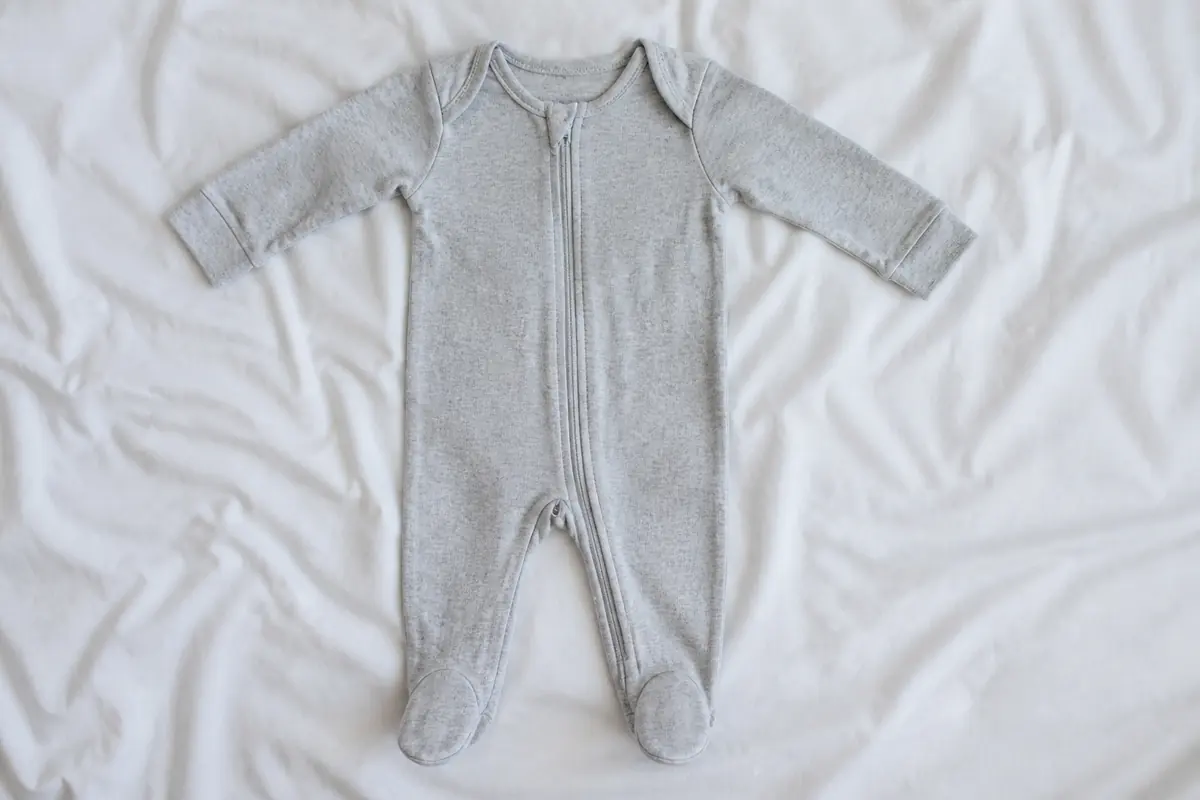
Babygrow vs sleepsuit: same garment?
UK babygrow, sleepsuit and bodysuit differences, sizing and laundry planning. Compare selected Gerber multipacks with exact ages, fabrics and pack checks.
-
planning
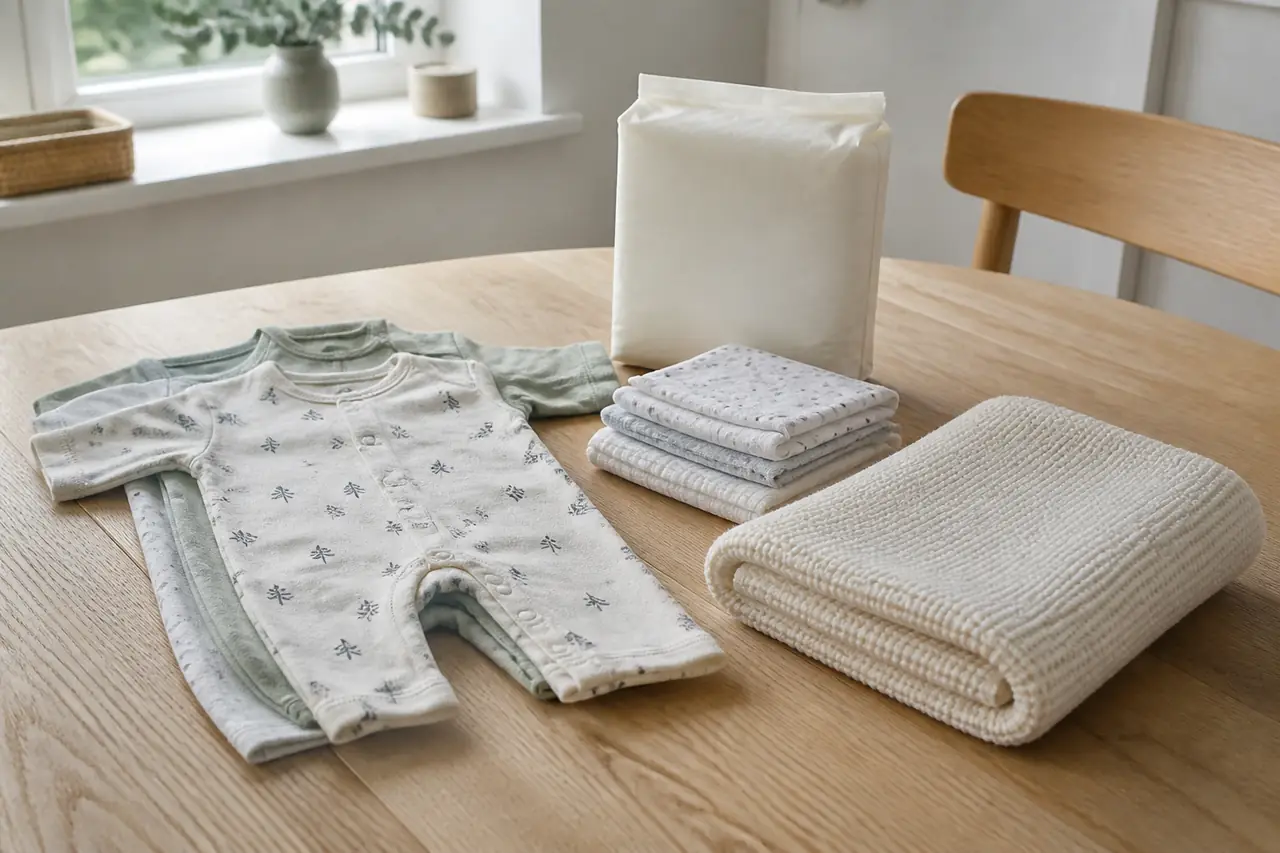
Newborn essentials checklist UK: what to buy
What a newborn really needs in the UK: a room-by-room checklist of essentials, what can wait, what to skip and the safety checks to make before you buy.
-
gifts
Best newborn gifts UK: what parents actually use
Practical newborn gift ideas UK parents actually use, from sleepsuits and muslins to meals and vouchers, plus the popular gifts that tend to go unused.
-
clothes
UK baby clothes sizes: newborn to 24 months
UK baby clothes sizes from newborn to 18–24 months: what each size band means, how many sleepsuits to buy for each stage and when to size up.
-
gifts
What to put in a new baby hamper
What to put in a new baby hamper: a UK list of four to six useful items plus one keepsake, what to leave out, and how to pick sizes that will fit later.
-
gifts
Baby muslin cloths UK: sizes, packs and uses
Compare baby muslin cloth sizes, pack quantities and cotton details. Two exact Amazon UK packs for feeding and burping, with buying checks and care advice.